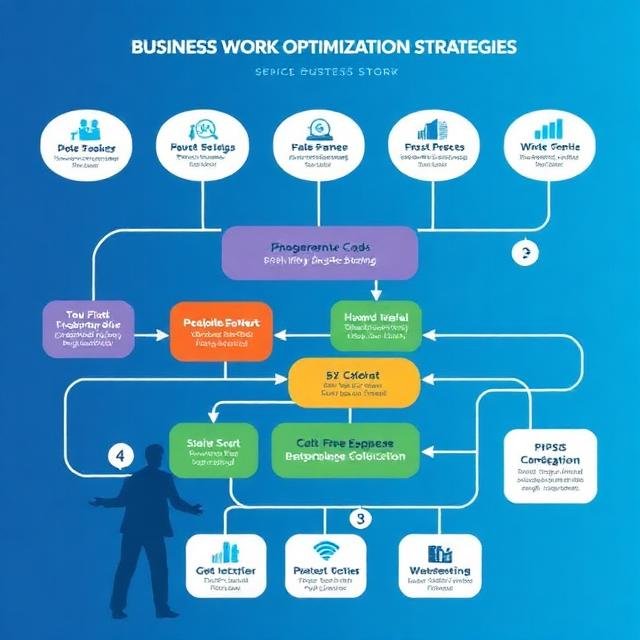
Business Workflow Optimization Strategies
In today’s competitive business environment, companies must operate efficiently to stay ahead. One of the most effective ways to improve productivity and reduce operational costs is by optimizing business workflows. A workflow refers to the sequence of tasks, processes, and activities required to complete a specific business operation.
When workflows are well organized and efficient, businesses can complete tasks faster, reduce errors, and improve overall performance. In this blog, we will explore practical strategies that organizations can use to optimize their workflows and achieve better results.
What Is Workflow Optimization?
Workflow optimization is the process of analyzing, improving, and automating business processes to make them more efficient and effective. The goal is to eliminate unnecessary steps, reduce delays, and ensure that tasks move smoothly from one stage to another.
Optimized workflows help businesses:
- Improve productivity
- Reduce operational costs
- Minimize errors and delays
- Enhance team collaboration
- Deliver better customer experiences
For businesses of all sizes, workflow optimization can lead to significant improvements in efficiency.
1. Map Out Existing Workflows
The first step in optimizing workflows is understanding how your current processes operate. Mapping out workflows allows you to visualize each step and identify areas where improvements can be made.
To create a workflow map:
- List all tasks involved in a process
- Identify who is responsible for each task
- Determine how tasks move from one stage to the next
- Identify bottlenecks or delays
Once the workflow is clearly documented, it becomes easier to identify inefficiencies.
2. Identify Bottlenecks and Inefficiencies
Bottlenecks occur when one stage of a process slows down the entire workflow. Identifying these problem areas is critical for optimization.
Common workflow bottlenecks include:
- Manual data entry tasks
- Approval delays
- Poor communication between departments
- Lack of standardized procedures
Addressing these issues can significantly improve the speed and reliability of business processes.
3. Automate Repetitive Tasks
Automation is one of the most effective ways to optimize workflows. Many repetitive tasks can be handled by software tools, allowing employees to focus on higher-value work.
Tasks that can often be automated include:
- Email notifications
- Invoice generation
- Customer support responses
- Data entry and reporting
- Appointment scheduling
Automation not only saves time but also reduces the risk of human error.
4. Standardize Processes
Standardization ensures that tasks are performed consistently across the organization. When processes are standardized, employees know exactly how to complete tasks efficiently.
To standardize workflows:
- Create clear guidelines for common tasks
- Develop process documentation
- Train employees on standardized procedures
- Use templates and checklists
Consistency helps teams work faster and reduces confusion.
5. Improve Team Collaboration
Many workflow issues arise from poor communication between teams. Encouraging collaboration and clear communication can significantly improve workflow efficiency.
Ways to enhance collaboration include:
- Using project management tools
- Sharing documents through cloud platforms
- Holding regular team updates
- Encouraging cross-department communication
When teams collaborate effectively, tasks move more smoothly through the workflow.
6. Use Workflow Management Tools
Modern workflow management tools can help businesses track tasks, monitor progress, and manage projects more effectively.
These tools often provide features such as:
- Task assignment and tracking
- Deadline reminders
- Real-time collaboration
- Performance analytics
Using digital tools helps businesses maintain organized and transparent workflows.
7. Continuously Monitor and Improve Workflows
Workflow optimization is not a one-time process. Businesses should regularly review and refine their workflows to maintain efficiency.
Continuous improvement can involve:
- Collecting employee feedback
- Analyzing performance metrics
- Updating processes based on new technologies
- Adjusting workflows as business needs change
Regular evaluation ensures that workflows remain effective over time.
8. Focus on Customer-Centric Processes
Ultimately, workflows should support the goal of delivering value to customers. Businesses should design workflows that prioritize customer satisfaction and service quality.
Customer-focused workflow improvements may include:
- Faster response times
- Simplified ordering processes
- Efficient issue resolution
- Better communication with clients
When workflows align with customer needs, businesses can build stronger relationships and improve loyalty.
Final Thoughts
Workflow optimization is an essential strategy for improving business performance and operational efficiency. By mapping existing processes, eliminating bottlenecks, automating repetitive tasks, and encouraging collaboration, organizations can create smoother and more productive workflows.
As businesses continue to grow and adapt to changing markets, optimizing workflows will remain a key factor in achieving long-term success and maintaining a competitive edge.