You can drive thousands of visitors to your website. You can run ads, post on social media, and build an email list. But if your sales funnel isn’t optimized, most of that traffic will slip through your fingers like water through a sieve.
Here’s the truth: traffic alone doesn’t grow a business. Conversions do.
Sales funnel optimization is about improving each stage of your customer journey so more people move from awareness to purchase — and beyond. It’s not about being pushy. It’s about removing friction, building trust, and guiding prospects naturally toward a decision.
Let’s break it down step by step in a clear, practical way.
🔍 What Is a Sales Funnel?
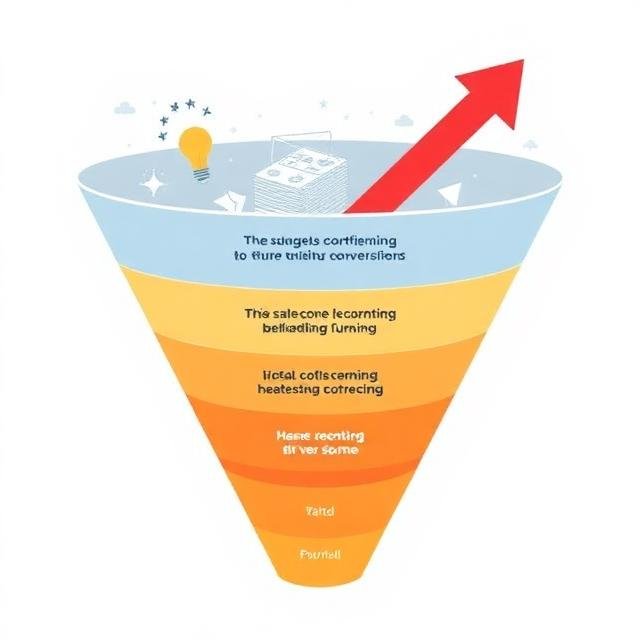
A sales funnel represents the journey your potential customer takes from discovering your business to becoming a paying client.
It typically includes four stages:
- Awareness – They discover your brand.
- Interest – They explore your offerings.
- Decision – They consider purchasing.
- Action – They buy (or convert).
Imagine it like a real funnel: many people enter at the top, but only some reach the bottom. Optimization is about widening the bottom without shrinking the top.
🎯 Step 1: Understand Your Audience Deeply
Before optimizing anything, you must understand who you’re targeting.
Ask yourself:
- What problem are they trying to solve?
- What fears or objections do they have?
- What motivates their buying decisions?
- Where do they drop off in your funnel?
Data matters here. Use analytics tools to identify where visitors leave your site or abandon their carts. If you don’t know where the leak is, you can’t fix it.
When you understand your audience clearly, every other optimization becomes easier.
🧲 Optimize the Top of the Funnel (Awareness Stage)
The top of your funnel attracts attention. If this stage isn’t strong, nothing else matters.
To improve awareness:
- Create high-quality blog content
- Use SEO to rank for relevant keywords
- Run targeted ads
- Share valuable content on social media
- Offer free resources (lead magnets)
The key here isn’t selling — it’s attracting the right people. Broad traffic is nice. Qualified traffic is better.
Focus on solving real problems. When people find helpful content, they naturally move deeper into your funnel.
📥 Improve Lead Capture for Better Engagement
Once someone visits your website, the next goal is capturing their information.
Common lead capture methods include:
- Free downloads
- Free trials
- Consultation booking forms
- Newsletter signups
- Discount offers
But here’s the important part: your offer must feel valuable.
If you’re asking for an email address, give something worth exchanging for it. A vague “Sign up for updates” won’t convert nearly as well as “Download the Free 7-Step Growth Blueprint.”
Clarity increases conversions.
💬 Strengthen the Middle of the Funnel (Consideration Stage)
At this stage, prospects are evaluating you. They’re comparing options. They’re asking:
“Why should I choose you?”
This is where trust-building content becomes crucial.
Use:
- Case studies
- Testimonials
- Detailed product pages
- FAQ sections
- Educational email sequences
Answer objections before they’re asked.
For example:
If pricing is a concern, explain the value.
If trust is an issue, show proof.
If confusion exists, simplify your messaging.
The middle of the funnel is about reassurance.
💡 Simplify Your Offer
Sometimes, conversion problems aren’t about traffic — they’re about confusion.
If your offer is unclear, complicated, or overloaded with options, prospects hesitate.
To optimize:
- Focus on one primary offer
- Use simple language
- Highlight key benefits
- Remove unnecessary steps
Clarity beats cleverness every time.
If a visitor can’t explain what you offer in one sentence after reading your page, it needs improvement.
🔥 Optimize the Bottom of the Funnel (Decision Stage)
This is where conversions happen — or don’t.
Small improvements here can dramatically increase revenue.
Key Optimization Areas:
1. Strong Calls-to-Action (CTAs)
Be direct. Instead of “Submit,” use “Start My Free Trial” or “Book My Strategy Call.”
2. Reduce Friction
Limit form fields. Simplify checkout. Offer multiple payment options.
3. Address Risk
Add guarantees, refund policies, or free trials to reduce fear.
4. Use Urgency (Ethically)
Limited-time offers or bonuses can encourage faster decisions.
The goal is to remove hesitation.
📊 Use A/B Testing for Continuous Improvement
You shouldn’t guess what works — you should test it.
A/B testing compares two versions of a page, headline, button, or email to see which performs better.
Test elements like:
- Headlines
- CTA buttons
- Images
- Pricing layouts
- Email subject lines
Even small tweaks can significantly improve conversions over time.
Optimization is ongoing, not one-time.
📧 Optimize Your Email Funnel
Email marketing plays a major role in funnel performance.
An optimized email funnel:
- Welcomes new subscribers
- Educates prospects
- Builds authority
- Addresses objections
- Presents offers strategically
Don’t send random emails. Create sequences that guide subscribers step by step toward a clear outcome.
Consistency builds familiarity. Familiarity builds trust.
🧠 Use Behavioral Triggers
Automation allows you to respond to user behavior instantly.
For example:
- Send reminder emails for abandoned carts
- Offer discounts to inactive users
- Suggest related products after purchases
- Trigger follow-ups after webinar attendance
Behavior-based marketing feels personalized — and personalization increases conversions.
📉 Identify and Fix Drop-Off Points
Use analytics to track:
- Bounce rates
- Exit pages
- Cart abandonment
- Email open rates
- Conversion rates
If many users leave on a specific page, analyze why.
Is it too long?
Is it confusing?
Does it load slowly?
Every drop-off is a clue.
🏆 Improve Post-Purchase Experience
Optimization doesn’t stop after the sale.
Happy customers become repeat buyers and referral sources.
Improve post-purchase by:
- Sending thank-you emails
- Offering upsells or cross-sells
- Providing onboarding instructions
- Requesting reviews
Retention often costs less than acquisition.
⚠️ Common Sales Funnel Mistakes
Avoid these common errors:
- Focusing only on traffic
- Ignoring mobile optimization
- Overcomplicating checkout
- Not following up with leads
- Neglecting data analysis
A funnel should feel smooth, not overwhelming.
💰 The Power of Incremental Improvements
Here’s something powerful to remember:
If you increase your conversion rate from 2% to 3%, that’s a 50% increase in revenue from the same traffic.
Small improvements compound.
Sales funnel optimization isn’t about dramatic overhauls. It’s about steady refinements.
🏁 Final Thoughts
Sales funnel optimization is the difference between working harder and working smarter.
Instead of constantly chasing more traffic, focus on converting more of the traffic you already have. Study your audience. Simplify your messaging. Remove friction. Build trust. Test continuously.
A well-optimized funnel feels natural — like guiding someone down a clear path rather than pushing them through a maze.
When every stage works together smoothly, conversions increase automatically.
And higher conversions mean higher revenue without increasing ad spend.
That’s real growth.